
Garland City Directory Collections
Garland historical directory research has several shelves rather than one complete run. The Texas State Library and Archives Commission list identifies Garland volumes for 1961, 1966 through 1979, and 1981. A missing standalone Garland year does not end the search. Dallas and greater-area books can include Garland households, while telephone and library databases may cover a different slice of the same period. Check the title, publisher, and geographic scope before treating any volume as city-only evidence.
| Collection | Years | Where Held | Access |
|---|---|---|---|
| Garland city directories | 1961; 1966–1979; 1981 | Texas State Library and Archives Commission | Austin reading-room holdings; verify volume and shelf status |
| Dallas and greater-area directories | Dallas runs listed 1875–1991 | TSLAC and digitized collections | Use a broader book when a Garland year is absent |
| Garland Telephone Directory | 1955–1999, with gaps | UT Austin Briscoe Center | Citation and collection route; request or read under archive rules |
| UNT city directories | Title and year dependent | Portal to Texas History | Search by county or time, then inspect page images and OCR |
| HeritageQuest city directories | Licensed collection, run varies | Garland Public Libraries | Remote access with a Garland library card when licensed |
These are historical household clues. A directory can list a subscriber or householder and may omit another person at the same address. It can also retain an old listing after a move. Pair its date with a deed, census, newspaper, or map before drawing a conclusion about a Garland family.
Garland Directory Years at TSLAC
The TSLAC run gives a concrete starting calendar: 1961, then 1966 through 1979, and 1981. Its city-directory research guidance explains that print and microform materials in the Austin Reading Room are on-site. Staff do not search or transcribe entries by phone or email. That makes the catalog, a confirmed shelf check, and a page citation important before making a trip.
TSLAC also points researchers toward UNT, UT Austin, library editions of directory databases, WorldCat, and Library of Congress guides. This matters when a surname appears in a Dallas-area book but not in a standalone Garland volume. Follow the book's stated coverage, including nearby communities, instead of treating its city title as a hard boundary.
Garland Genealogy and History links the local library's historical resources, including collection routes useful after a TSLAC gap.
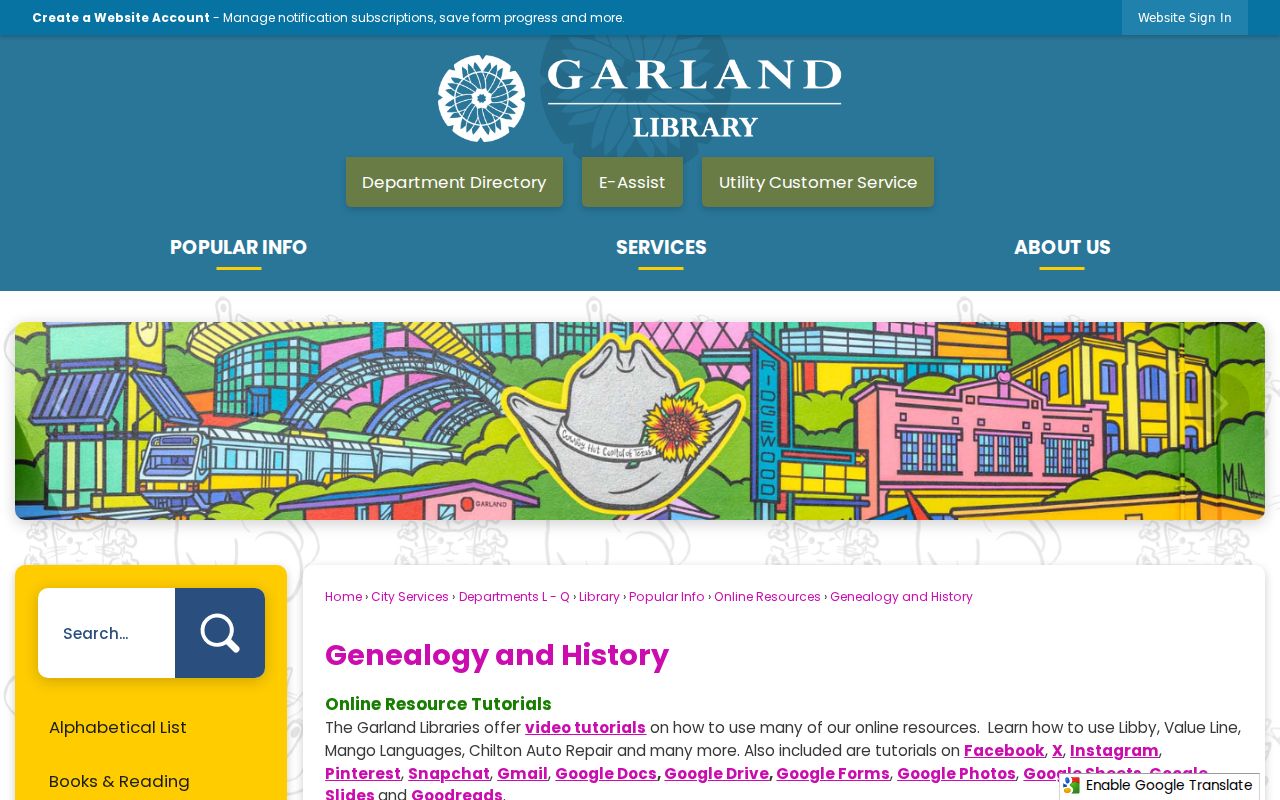
Garland's local genealogy page helps connect a directory search to microfilm, databases, historical sites, and map resources.
Note: A listed year shows a collection lead, so confirm the exact volume, condition, and access rules before relying on a visit.
Use Garland City Directory Reading Rooms
Texas State Library and Archives Commission guidance separates online discovery from on-site access. Its city-directory materials in the Austin Reading Room include print and microform holdings, while staff do not search or transcribe entries by phone or email. Confirm the catalog record, the exact volume, and reading-room access before making a trip for a Garland year that is not digitized.
The Texas State Library city-directory research page maps the Austin shelf, UNT, UT Austin, library databases, WorldCat, and Library of Congress alternatives.
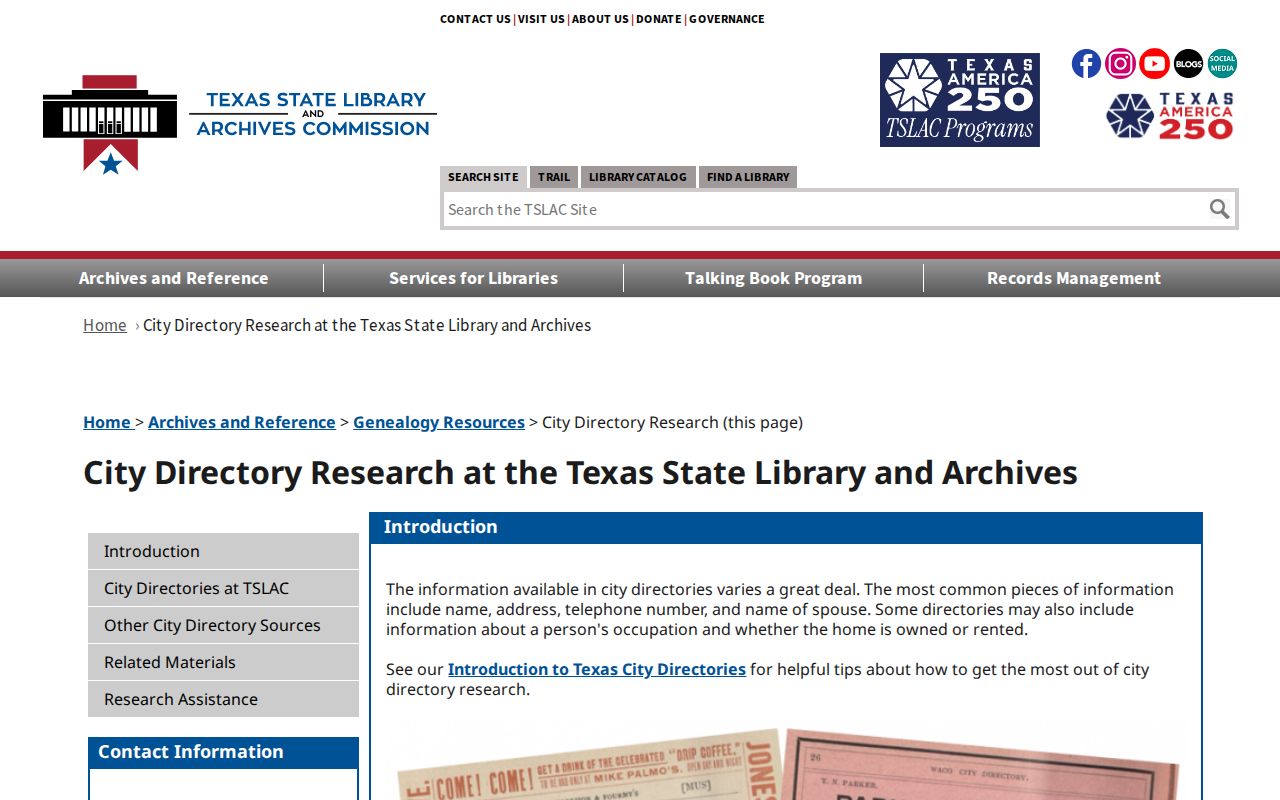
Its guidance helps distinguish a searchable digital copy from a volume that must be consulted in person or through a participating library collection.
Garland City Directories Online
UNT's Portal to Texas History city-directory collection offers a browser route for digitized volumes. Narrow results by county or time, then open the page image rather than relying only on search snippets. The 1961 Dallas R.L. Polk volume is a useful example of the broader-area approach: it is 2,575 pages and includes individual and business addresses, household and occupant material, a street and avenue guide, a numerical telephone directory, advertisements, and classified pages.
A Dallas volume may contain a Garland entry even where a standalone Garland book is not listed. The volume's page image and citation establish what was printed. OCR helps locate a possible surname or street, but it can distort initials, abbreviations, and street names.
The UNT collection search is the digital entry point for these city-directory scans.
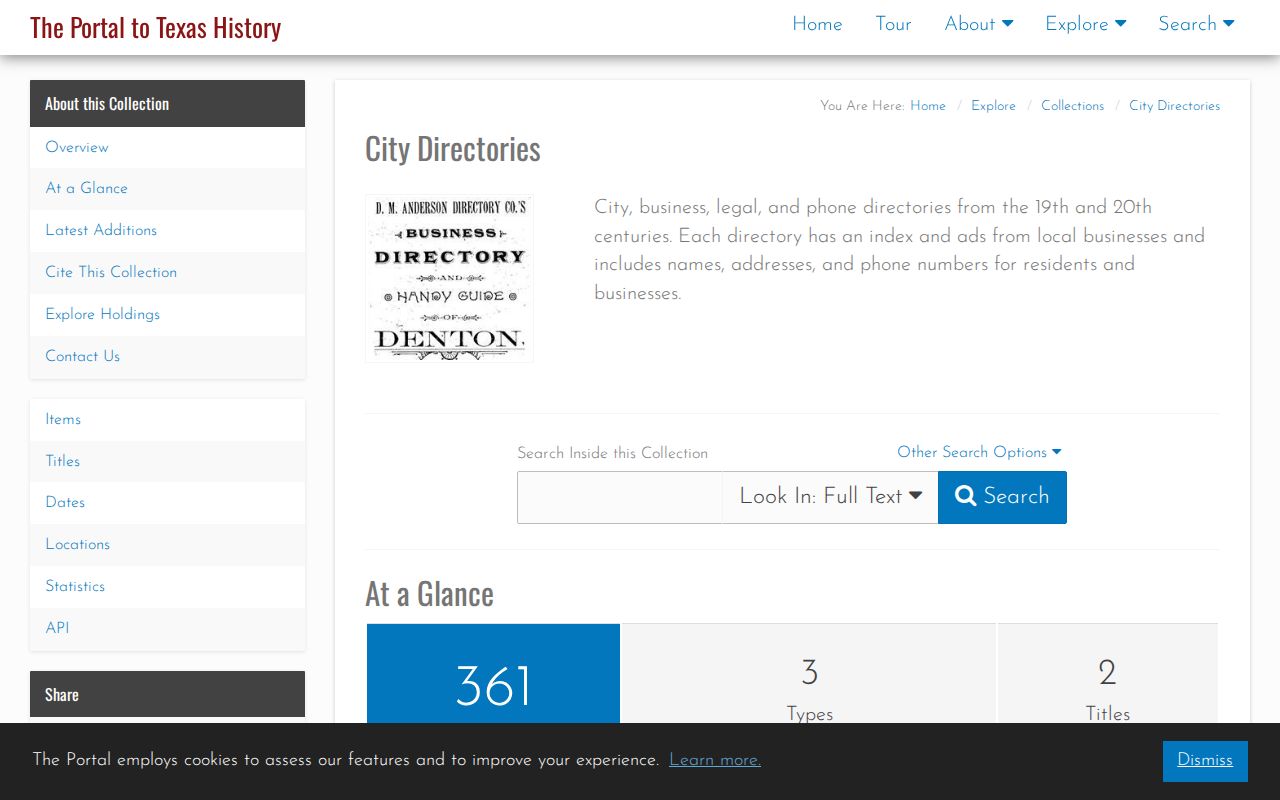
Use the collection filters to locate a candidate volume, then retain the item title, publication year, page, and image reference with the Garland directory note.
How Garland City Directory Entries Read
The inspected 1961 Dallas directory page shows the compact style researchers will meet in Garland-area books: a personal name, a spouse in parentheses, an abbreviated occupation or employer field, and residence wording such as r Garland or r Garland Tex. Read the title-page instructions and abbreviation list for that particular volume. A shorthand mark has meaning only in the book that defines it.
| Printed name | The person indexed by that volume, with spelling and initials preserved as printed. |
|---|---|
| Spouse or relationship | A parenthetical household clue when the entry supplies one. |
| Occupation or affiliation | A historical directory field, not a current identity claim. |
| Residence or business address | The printed location, checked against the year and city label. |
| Telephone and notation | Fields and abbreviations that vary by volume; cite their printed key. |
- Criss-cross directory
- An address-first arrangement that can lead from a street address to a listed household. Garland availability must be checked volume by volume.
- Householder index
- A portion of a directory organized around a household or address. It may not identify every person who lived there.
- Abbreviation key
- The volume's explanation of shortened labels and letters. Preserve it before interpreting an entry.
The page image is the evidence when OCR and print disagree. Preserve the original spelling even when it looks unusual, then search a reasonable variant separately rather than silently correcting the historical record.
Garland Telephone Directory Run
The UT Austin citation record identifies Garland Telephone Directory issues for April 1955; January and November 1957; May 1959 through 1971; April 1974 through 1985; July 1988 through 1996; and August 1999. It also identifies a wider service area that includes Garland, Dallas, Mesquite, Plano, Rockwall, Rowlett, Sachse, Sunnyvale, Wylie, and nearby communities. Those geographic limits are part of the citation, not a defect in the collection.
Telephone directories can fill a gap between city-directory volumes, but they remain subscriber-oriented historical records. A listed phone or address is not proof that every member of a household appeared, and it does not confirm modern occupancy. Compare the issue date, place coverage, and printed entry with independent records.
UT Austin's Garland Telephone Directory citation records the issue sequence and geographic coverage.
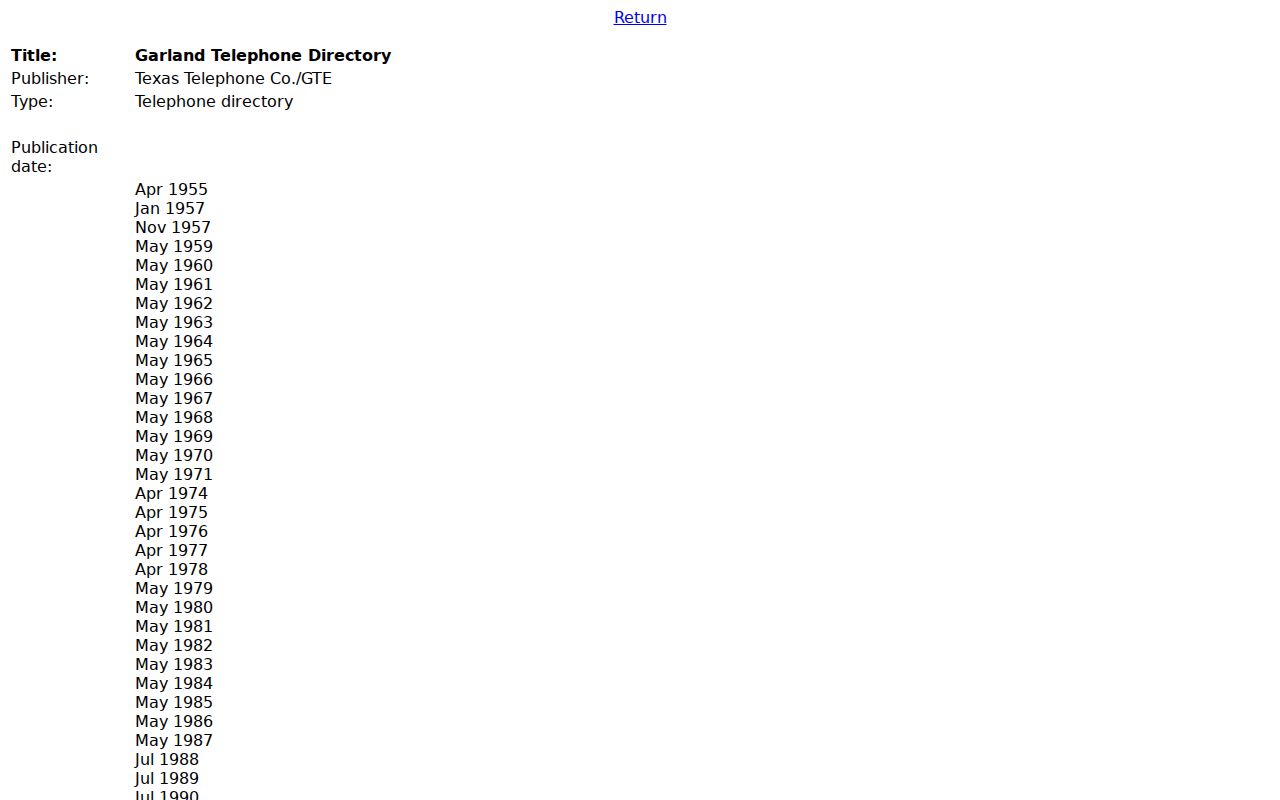
The citation page is a reliable way to document which issue is being sought before using the archive's collection-access procedures.
Garland Directory Images Over OCR
OCR is a locating aid, not a transcription guarantee. The 1961 Dallas directory inspection found abbreviated personal entries and the Garland residence notation, precisely the details most likely to be garbled by automated text. Open the scan after any OCR hit. If a surname, initial, street suffix, or abbreviation differs, quote the page image and note the OCR term only as the route that found it.
Record the volume title, publisher, year, page, and whether the conclusion came from an image or an OCR result. That small practice keeps a Garland city directory search reproducible when the same name appears in a later database with a different spelling.
Use the same caution with an address. A street guide, numerical telephone section, or alphabetical entry can present a similar location in a different form. Compare the house number, street suffix, city label, and publication year before joining the entries. If the image is unreadable, record that limitation and try the library copy, a second scan, or a neighboring directory year rather than silently filling in a name.
Trace Garland City Directory Households
Directory years work best as a sequence. Start with an entry that has a clear address, then test the same street in the next available volume. Note number changes, street suffixes, city labels, and whether the listed person appears as a householder, subscriber, or business contact. The process can reveal a move, but a disappearance has several possible explanations and needs a second source.
- Copy the printed name, address, year, page, and any abbreviation exactly as it appears.
- Check the next available Garland or greater-Dallas directory year for the same surname and street.
- Test an address-first section only when that volume actually includes one, and label the result as a directory listing.
- Pair the address and period with census material through HeritageQuest or another documented historical collection.
- Use Garland newspaper microfilm, a deed, or a map to resolve a move, death notice, changed street form, or missing listing.
The Garland genealogy and history resources point to HeritageQuest, FamilySearch, Texas Digital Sanborn Maps, and local historical material. A Garland library card is the stated remote route for HeritageQuest, subject to the current database license.
Garland City Directory Library Routes
Central Library is the local research stop at 625 Austin Street. It has specialized genealogy, business, and law reference material, Garland newspaper microfilm from 1900 through 2000, and Dallas Morning News microfilm from 1972 forward. The reference number is 972-205-2501. North, South, and West branches provide additional library access, but Central is the confirmed local-history anchor. Check the library contact page for current branch hours before visiting.
A Texas driver license or state ID with current address is the stated library-card route. When a book is not online, use Central for microfilm, database help, or interlibrary loan, then use TSLAC's Austin Reading Room for its on-site collection. That is the documented fallback chain, not a dead end.
Note: Directory databases and branch hours can change, so confirm current access before planning a Garland historical research visit.
Garland Directory Names Before Garland
Older searches need more than the modern city name. Garland grew from the Duck Creek settlements and the rail-era communities of Embree and New Duck Creek. An 1887 fire destroyed the Old Duck Creek business district, and the 1899 Thanksgiving fire changed the town again. Records can therefore use Duck Creek, Embree, New Duck Creek, Garland, Dallas County, or a railroad or station description for related people and places.
Search those predecessor names in newspapers, county indexes, directories, and census work before rejecting an apparent mismatch. The City of Garland's Historic Downtown history supplies the local context for that name change and the fire-era shifts. This is a useful check when an early directory result seems to place a family outside modern Garland.